 Up to 12 year labour warranty



Boiler Repair Cost: Who Should Check an Underfloor Heating Problem Before You Pay?
When the heating stops working, most homeowners want the same thing: a clear answer, a fair price and no unnecessary repairs. But if your home has underfloor heating, it is not always obvious whether the boiler is actually the problem.

Why you can trust our content
At CafGas CIC, we know choosing a new boiler can feel overwhelming, especially with so much conflicting advice online. That’s why we focus on clear guidance, honest recommendations, and trusted expertise to help homeowners make informed decisions about their heating systems.

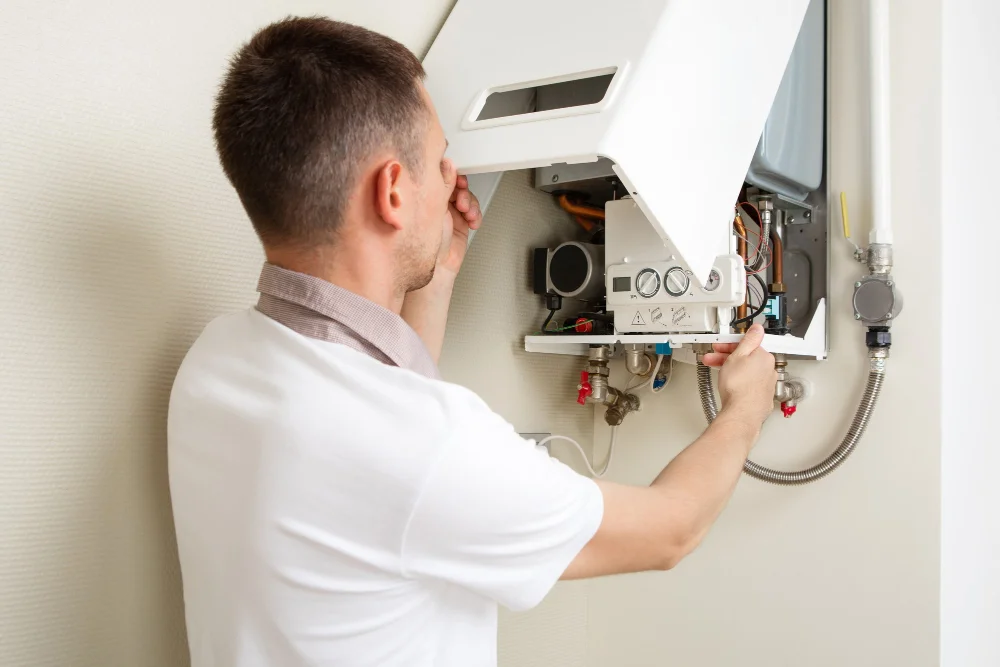
A cold floor zone, slow warm-up time or unresponsive thermostat can look like a boiler fault. In reality, the issue might be with the underfloor heating manifold, pump, actuator, thermostat, wiring centre or water flow. Paying for the wrong repair can quickly become frustrating.
If you are trying to understand boiler repair cost, the first step is proper diagnosis. If you are unsure what has failed, speak to CAF Gas CIC for practical advice before committing to repair work.
Should a Boiler Engineer Check Underfloor Heating Problems?
Yes, if the issue could be linked to the boiler or wet heating system, a qualified heating engineer should check it. The important point is that the engineer should look at the wider system, not just the boiler.
Water-based underfloor heating connects to the boiler through heating circuits, controls and often a manifold. If the boiler is producing heat but the floor zone is not warming, the problem may sit beyond the boiler itself.
A good engineer should ask what is working and what is not. For example, are the radiators hot? Is the hot water working? Is the boiler showing a fault code? Is only one floor zone affected? These answers help narrow down the cause.
Why Is Diagnosis Important Before Paying?
Diagnosis matters because heating faults can have similar symptoms. A homeowner may say, “the boiler is broken,” but the real issue might be that the underfloor heating thermostat is not calling for heat.
Without proper checks, you could pay for a boiler visit, replacement part or reset that does not solve the actual problem.
A proper diagnosis should check:
- Boiler pressure
- Fault codes
- Heating and hot water operation
- Thermostat settings
- Zone controls
- Underfloor heating manifold
- Pump operation
- Actuators
- Signs of poor circulation
- System water condition
This helps make the repair more targeted and reduces the risk of repeat callouts.
What Affects the Cost of a Boiler Repair?
Several factors can affect the final price. Some repairs are simple, while others involve parts, labour and further investigation.
| Cost Factor | Why It Matters | Possible Impact |
| Type of fault | Some faults are quicker to fix than others | Affects labour and parts |
| Boiler age | Older boilers may need harder-to-source parts | Can increase cost |
| Fault location | Boiler, controls or manifold may need checking | Affects diagnosis time |
| Parts required | Replacement components vary in price | Can increase final bill |
| System condition | Sludge or poor circulation can complicate repairs | May need cleaning or extra work |
| Cover status | Some repairs may be included under a plan | Can reduce upfront payment |
This is why boiler repair cost is difficult to confirm without checking the actual fault.
Could the Problem Be the Underfloor Heating Instead?
Yes, the problem could be the underfloor heating rather than the boiler. This is especially likely if the boiler still provides hot water or heats radiators normally.
Underfloor heating issues may include:
- Faulty thermostat
- Dead thermostat batteries
- Stuck actuator
- Manifold pump fault
- Air trapped in the system
- Poor flow through one loop
- Wiring centre issue
- Incorrect control settings
- Mixing valve problem
In these cases, replacing boiler parts may not fix the issue. The underfloor heating components need to be tested as part of the wider heating diagnosis.
Who Should You Call First?
If you have a gas boiler and wet underfloor heating, start with a qualified heating engineer who understands full heating systems. They should be able to check the boiler safely and assess connected heating components.
If the issue is clearly with electric underfloor heating, then an electrician or specialist may be needed instead. But for water-based underfloor heating connected to a gas boiler, a heating engineer is usually the right first call.
For homeowners considering boiler cover Deeside, it is worth checking whether your plan includes controls, pumps, zone valves or underfloor heating components. Some plans cover the boiler only, while others may include wider heating parts.
What Should You Check Before Calling?
There are a few simple checks you can do safely before booking a repair. Do not open the boiler casing or attempt gas work.
You can check:
- Is the boiler switched on?
- Is there a visible fault code?
- Is the pressure gauge in the normal range?
- Is hot water working?
- Are radiators heating?
- Are thermostat batteries working?
- Are heating schedules correct?
- Is only one room or zone affected?
- Has anyone recently changed the controls?
These details help the engineer understand whether the problem sounds like the boiler, controls or underfloor heating.
[CTA 2] If you are unsure what to check, contact CAF Gas CIC and explain the symptoms. The team can guide you on the next sensible step.
Which fuel powers your boiler?
It just takes 2 minutes
And then you can book a free consultation
When Is It More Likely to Be a Boiler Fault?
It is more likely to be a boiler fault if the whole heating system has stopped, there is no hot water, the boiler locks out or a fault code keeps appearing.
Common signs include:
- No heating anywhere
- No hot water
- Boiler losing pressure
- Repeated lockouts
- Error code on display
- Boiler making unusual noises
- Leaking from the appliance
- Pilot or ignition problems on older models
These issues should be checked by a qualified engineer. If gas safety is involved, do not attempt repairs yourself.
When Is It More Likely to Be an Underfloor Heating Fault?
It is more likely to be an underfloor heating fault if the boiler appears to be working and other parts of the heating system are fine.
Signs include:
- Radiators are hot but floor heating is cold
- Only one underfloor zone is affected
- The thermostat does not seem to trigger heat
- The manifold pump is not running
- The floor warms in some areas but not others
- Hot water works as normal
- Boiler has no fault code
This does not mean the boiler should be ignored. It means the diagnosis should include the underfloor heating controls and manifold.
Should You Use Boiler Cover or Pay for a One-Off Repair?
This depends on your circumstances, the age of your boiler and what the cover includes. A one-off repair may be suitable if the issue is minor or your boiler is generally reliable. Cover may suit homeowners who prefer predictable payments and support for unexpected faults.
Before choosing, check:
- Monthly cost
- Callout limits
- Parts and labour included
- Excess fees
- Boiler age restrictions
- Annual service inclusion
- Whether controls are covered
- Whether underfloor heating parts are included
- Exclusions
- Emergency response terms
For boiler cover Deeside, the small print matters. A plan that only covers the boiler may not help if the issue is actually with underfloor heating controls.
Why Can Cover Exclusions Cause Confusion?
Cover exclusions can cause confusion because homeowners may assume “heating cover” includes every part of the heating system. Some policies are narrower than that.
A plan may cover the boiler but exclude:
- Thermostats
- Smart controls
- Underfloor heating manifolds
- Pumps outside the boiler
- Zone valves
- Sludge-related issues
- Pre-existing faults
- Poor installation problems
This does not mean cover is bad. It means you should understand what is included before relying on it.
Example Scenario: Cold Kitchen Floor, Working Radiators
A Deeside homeowner notices the kitchen underfloor heating is not warming up. The upstairs radiators are hot, the shower is working and the boiler display looks normal.
In this situation, the engineer checks the boiler first for safety and operation. They then inspect the thermostat and manifold. The issue turns out to be a stuck actuator on the underfloor heating manifold, not a boiler part.
The homeowner avoids paying for unnecessary boiler components because the full system was checked before repair work began.
How Can You Avoid Paying Twice?
The best way to avoid paying twice is to describe the symptoms clearly and choose someone who will diagnose before replacing parts.
Tell the engineer:
- Which rooms are affected
- Whether hot water works
- Whether radiators work
- Whether the boiler shows a fault code
- Whether the issue is constant or occasional
- Whether controls have recently changed
- Whether the system has underfloor heating
This helps prevent a narrow repair approach. It also helps the engineer bring the right tools or parts where possible.
When Is Replacement Better Than Repair?
Replacement may be worth discussing if the boiler is old, unreliable or expensive to keep fixing. However, do not assume replacement is needed just because underfloor heating is not working.
A boiler replacement may make sense if:
- Breakdowns are frequent
- Repair costs are high
- Parts are hard to source
- The boiler is inefficient
- Warranty has expired
- The boiler struggles with heating demand
- Safety concerns are present
However, if the fault sits with the underfloor heating controls, replacing the boiler may not solve it. Diagnosis comes first.
How Should a Repair Visit End?
A good repair visit should end with a clear explanation. You should understand what was checked, what fault was found and what work was completed.
The engineer should explain:
- Whether the boiler was at fault
- Whether underfloor heating parts were involved
- Whether any parts were replaced
- Whether further work is recommended
- Whether the system is safe to use
- How to avoid repeat issues
- Whether servicing or system cleaning is advised
This gives you confidence that the repair was necessary and correctly targeted.
Final Advice Before You Pay
Before paying for a repair, make sure the fault has been properly diagnosed. If your home has underfloor heating, the problem may not sit inside the boiler itself.
A careful inspection can save money, reduce repeat visits and help you choose between repair, cover or future replacement. For boiler repair cost, clarity matters just as much as the final price. Speak to CAF Gas CIC for honest advice and a practical next step.
Final Thoughts
Underfloor heating problems can look like boiler problems, but the cause is not always inside the boiler. Before paying, make sure the engineer checks the boiler, controls, manifold and circulation properly.
CAF Gas CIC can help Deeside homeowners get clear answers, fair advice and the right repair route without unnecessary guesswork.
Related articles
Which fuel powers your boiler?
At a glance
A cold floor zone, slow warm-up time or unresponsive thermostat can look like a boiler fault. In reality, the issue might be with the underfloor heating manifold, pump, actuator, thermostat, wiring centre or water flow. Paying for the wrong repair can quickly become frustrating.
If you are trying to understand boiler repair cost, the first step is proper diagnosis. If you are unsure what has failed, speak to CAF Gas CIC for practical advice before committing to repair work.
Should a Boiler Engineer Check Underfloor Heating Problems?
Yes, if the issue could be linked to the boiler or wet heating system, a qualified heating engineer should check it. The important point is that the engineer should look at the wider system, not just the boiler.
Water-based underfloor heating connects to the boiler through heating circuits, controls and often a manifold. If the boiler is producing heat but the floor zone is not warming, the problem may sit beyond the boiler itself.
A good engineer should ask what is working and what is not. For example, are the radiators hot? Is the hot water working? Is the boiler showing a fault code? Is only one floor zone affected? These answers help narrow down the cause.
Why Is Diagnosis Important Before Paying?
Diagnosis matters because heating faults can have similar symptoms. A homeowner may say, “the boiler is broken,” but the real issue might be that the underfloor heating thermostat is not calling for heat.
Without proper checks, you could pay for a boiler visit, replacement part or reset that does not solve the actual problem.
A proper diagnosis should check:
- Boiler pressure
- Fault codes
- Heating and hot water operation
- Thermostat settings
- Zone controls
- Underfloor heating manifold
- Pump operation
- Actuators
- Signs of poor circulation
- System water condition
This helps make the repair more targeted and reduces the risk of repeat callouts.
What Affects the Cost of a Boiler Repair?
Several factors can affect the final price. Some repairs are simple, while others involve parts, labour and further investigation.
| Cost Factor | Why It Matters | Possible Impact |
| Type of fault | Some faults are quicker to fix than others | Affects labour and parts |
| Boiler age | Older boilers may need harder-to-source parts | Can increase cost |
| Fault location | Boiler, controls or manifold may need checking | Affects diagnosis time |
| Parts required | Replacement components vary in price | Can increase final bill |
| System condition | Sludge or poor circulation can complicate repairs | May need cleaning or extra work |
| Cover status | Some repairs may be included under a plan | Can reduce upfront payment |
This is why boiler repair cost is difficult to confirm without checking the actual fault.
Could the Problem Be the Underfloor Heating Instead?
Yes, the problem could be the underfloor heating rather than the boiler. This is especially likely if the boiler still provides hot water or heats radiators normally.
Underfloor heating issues may include:
- Faulty thermostat
- Dead thermostat batteries
- Stuck actuator
- Manifold pump fault
- Air trapped in the system
- Poor flow through one loop
- Wiring centre issue
- Incorrect control settings
- Mixing valve problem
In these cases, replacing boiler parts may not fix the issue. The underfloor heating components need to be tested as part of the wider heating diagnosis.
Who Should You Call First?
If you have a gas boiler and wet underfloor heating, start with a qualified heating engineer who understands full heating systems. They should be able to check the boiler safely and assess connected heating components.
If the issue is clearly with electric underfloor heating, then an electrician or specialist may be needed instead. But for water-based underfloor heating connected to a gas boiler, a heating engineer is usually the right first call.
For homeowners considering boiler cover Deeside, it is worth checking whether your plan includes controls, pumps, zone valves or underfloor heating components. Some plans cover the boiler only, while others may include wider heating parts.
What Should You Check Before Calling?
There are a few simple checks you can do safely before booking a repair. Do not open the boiler casing or attempt gas work.
You can check:
- Is the boiler switched on?
- Is there a visible fault code?
- Is the pressure gauge in the normal range?
- Is hot water working?
- Are radiators heating?
- Are thermostat batteries working?
- Are heating schedules correct?
- Is only one room or zone affected?
- Has anyone recently changed the controls?
These details help the engineer understand whether the problem sounds like the boiler, controls or underfloor heating.
[CTA 2] If you are unsure what to check, contact CAF Gas CIC and explain the symptoms. The team can guide you on the next sensible step.
Which fuel powers your boiler?
It just takes 2 minutes
And then you can book a free consultation
When Is It More Likely to Be a Boiler Fault?
It is more likely to be a boiler fault if the whole heating system has stopped, there is no hot water, the boiler locks out or a fault code keeps appearing.
Common signs include:
- No heating anywhere
- No hot water
- Boiler losing pressure
- Repeated lockouts
- Error code on display
- Boiler making unusual noises
- Leaking from the appliance
- Pilot or ignition problems on older models
These issues should be checked by a qualified engineer. If gas safety is involved, do not attempt repairs yourself.
When Is It More Likely to Be an Underfloor Heating Fault?
It is more likely to be an underfloor heating fault if the boiler appears to be working and other parts of the heating system are fine.
Signs include:
- Radiators are hot but floor heating is cold
- Only one underfloor zone is affected
- The thermostat does not seem to trigger heat
- The manifold pump is not running
- The floor warms in some areas but not others
- Hot water works as normal
- Boiler has no fault code
This does not mean the boiler should be ignored. It means the diagnosis should include the underfloor heating controls and manifold.
Should You Use Boiler Cover or Pay for a One-Off Repair?
This depends on your circumstances, the age of your boiler and what the cover includes. A one-off repair may be suitable if the issue is minor or your boiler is generally reliable. Cover may suit homeowners who prefer predictable payments and support for unexpected faults.
Before choosing, check:
- Monthly cost
- Callout limits
- Parts and labour included
- Excess fees
- Boiler age restrictions
- Annual service inclusion
- Whether controls are covered
- Whether underfloor heating parts are included
- Exclusions
- Emergency response terms
For boiler cover Deeside, the small print matters. A plan that only covers the boiler may not help if the issue is actually with underfloor heating controls.
Why Can Cover Exclusions Cause Confusion?
Cover exclusions can cause confusion because homeowners may assume “heating cover” includes every part of the heating system. Some policies are narrower than that.
A plan may cover the boiler but exclude:
- Thermostats
- Smart controls
- Underfloor heating manifolds
- Pumps outside the boiler
- Zone valves
- Sludge-related issues
- Pre-existing faults
- Poor installation problems
This does not mean cover is bad. It means you should understand what is included before relying on it.
Example Scenario: Cold Kitchen Floor, Working Radiators
A Deeside homeowner notices the kitchen underfloor heating is not warming up. The upstairs radiators are hot, the shower is working and the boiler display looks normal.
In this situation, the engineer checks the boiler first for safety and operation. They then inspect the thermostat and manifold. The issue turns out to be a stuck actuator on the underfloor heating manifold, not a boiler part.
The homeowner avoids paying for unnecessary boiler components because the full system was checked before repair work began.
How Can You Avoid Paying Twice?
The best way to avoid paying twice is to describe the symptoms clearly and choose someone who will diagnose before replacing parts.
Tell the engineer:
- Which rooms are affected
- Whether hot water works
- Whether radiators work
- Whether the boiler shows a fault code
- Whether the issue is constant or occasional
- Whether controls have recently changed
- Whether the system has underfloor heating
This helps prevent a narrow repair approach. It also helps the engineer bring the right tools or parts where possible.
When Is Replacement Better Than Repair?
Replacement may be worth discussing if the boiler is old, unreliable or expensive to keep fixing. However, do not assume replacement is needed just because underfloor heating is not working.
A boiler replacement may make sense if:
- Breakdowns are frequent
- Repair costs are high
- Parts are hard to source
- The boiler is inefficient
- Warranty has expired
- The boiler struggles with heating demand
- Safety concerns are present
However, if the fault sits with the underfloor heating controls, replacing the boiler may not solve it. Diagnosis comes first.
How Should a Repair Visit End?
A good repair visit should end with a clear explanation. You should understand what was checked, what fault was found and what work was completed.
The engineer should explain:
- Whether the boiler was at fault
- Whether underfloor heating parts were involved
- Whether any parts were replaced
- Whether further work is recommended
- Whether the system is safe to use
- How to avoid repeat issues
- Whether servicing or system cleaning is advised
This gives you confidence that the repair was necessary and correctly targeted.
Final Advice Before You Pay
Before paying for a repair, make sure the fault has been properly diagnosed. If your home has underfloor heating, the problem may not sit inside the boiler itself.
A careful inspection can save money, reduce repeat visits and help you choose between repair, cover or future replacement. For boiler repair cost, clarity matters just as much as the final price. Speak to CAF Gas CIC for honest advice and a practical next step.
Final Thoughts
Underfloor heating problems can look like boiler problems, but the cause is not always inside the boiler. Before paying, make sure the engineer checks the boiler, controls, manifold and circulation properly.
CAF Gas CIC can help Deeside homeowners get clear answers, fair advice and the right repair route without unnecessary guesswork.


