 Up to 12 year labour warranty



Gas Boiler Installation Deeside: Which Hot-Water Settings Should Be Explained After Setup?
Discover which hot-water settings should be explained after a new gas boiler installation, including Preheat, Eco mode, temperature and controls.

Why you can trust our content
At CafGas CIC, we know choosing a new boiler can feel overwhelming, especially with so much conflicting advice online. That’s why we focus on clear guidance, honest recommendations, and trusted expertise to help homeowners make informed decisions about their heating systems.

Introduction
Having a new boiler installed is only part of the job. Once the appliance is working, homeowners also need to understand how to use it properly.
This is particularly important with modern combi boilers. A new appliance may have several controls affecting heating and hot water, including Preheat, Eco mode, temperature settings, timers and programmable functions. If these are not explained clearly, useful features can easily go unused or be adjusted incorrectly.
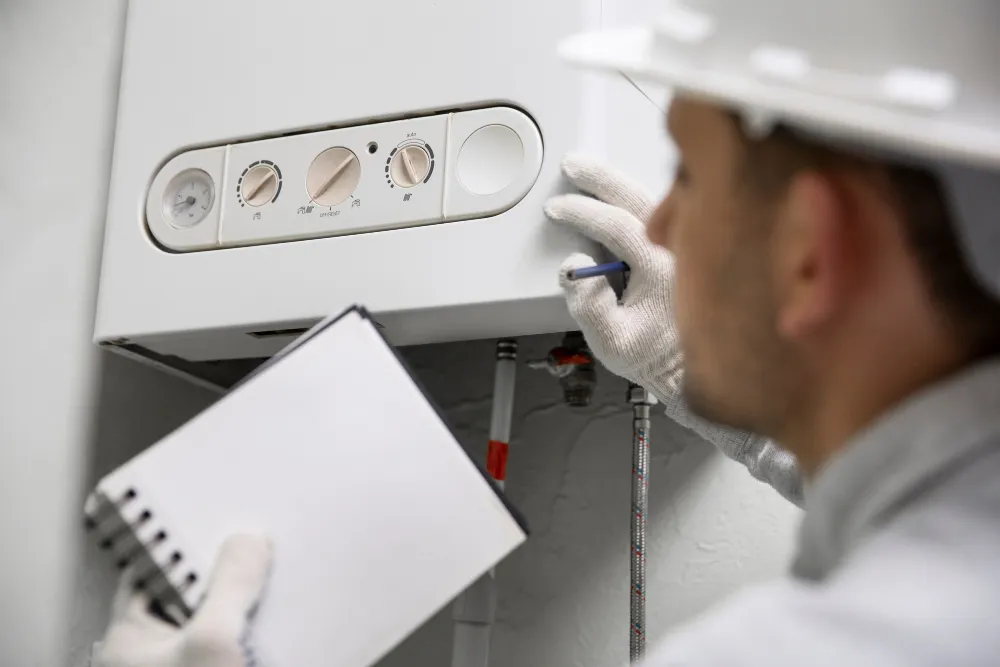
After gas boiler installation Deeside, homeowners should know what the main controls do, which settings are intended for everyday use and when a change in performance may indicate a problem rather than a setting that needs adjusting.
Why should boiler settings be explained after installation?
A boiler can be correctly fitted and commissioned but still be confusing to operate.
Modern appliances use digital displays, symbols and control interfaces that differ between manufacturers. Two boilers can perform similar functions while using completely different menus or terminology.
A proper handover should therefore give the homeowner enough practical information to operate the system confidently.
This should include:
- How to control central heating.
- How domestic hot water is managed.
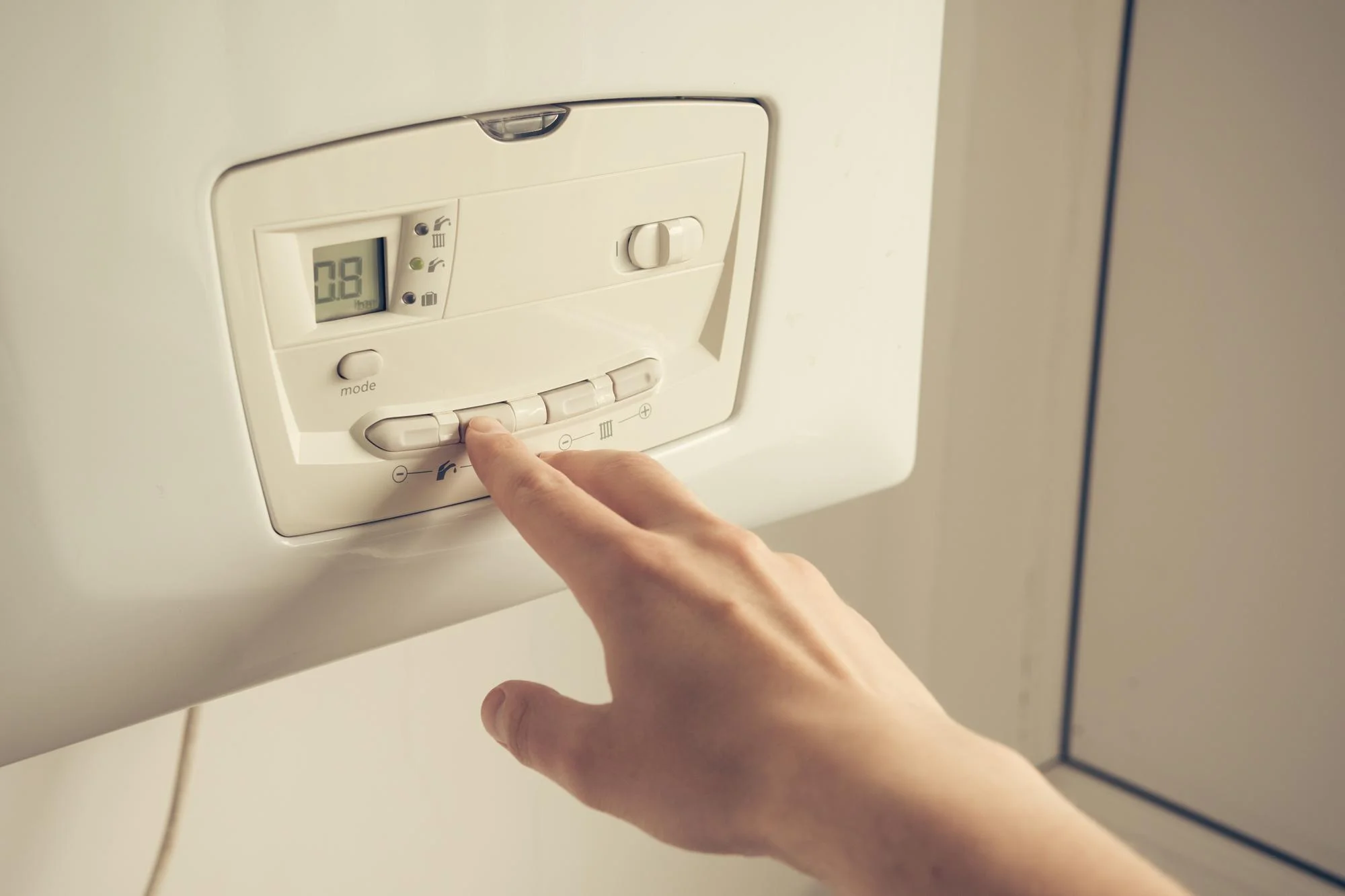
- What the main display symbols mean.
- How to adjust relevant temperatures.
- What Eco and Preheat functions do, if available.
- How the programmer or thermostat works.
- What normal operation sounds and looks like.
- Which warning signs require professional attention.
The manufacturer’s instructions remain the definitive source for model-specific operation, but a practical explanation can make those instructions much easier to understand.
If you are arranging a new installation and want the controls explained clearly, CafGas CIC can discuss the boiler’s operation with you and help make sure you understand the relevant settings from the start.
What should homeowners know about Preheat?
Preheat is designed to make a combi boiler ready for hot-water demand.
When enabled, the appliance keeps relevant components warm so it can respond more quickly when a hot tap is opened. This can reduce the initial boiler response time.
It does not mean the boiler stores a large supply of hot water.
A combi boiler generally heats mains water as it passes through the appliance. Even with Preheat enabled, hot water still has to travel from the boiler to the tap through the pipework.
That distinction matters because homeowners may otherwise expect instant hot water from every outlet.
What should the installer explain?
A homeowner should understand:
- Whether the boiler has a Preheat function.
- How to identify whether it is enabled.
- How to change the setting if the manufacturer permits this.
- What difference the setting can make.
- Why pipework can still cause some waiting time.
This makes it easier to set realistic expectations about hot-water delivery.
What does Eco mode do?
Eco mode generally disables the hot-water preheat function on compatible combi boilers.
Instead of keeping the appliance ready for immediate hot-water demand, the boiler waits until a tap is opened and then responds.
This can reduce the energy used for preheating, although the exact effect depends on the appliance and how the household uses hot water.
The trade-off is that hot water may take slightly longer to arrive.
Eco mode does not normally mean that hot water has been switched off. The boiler can still heat water when a demand occurs.
A homeowner should therefore know whether selecting Eco mode is changing hot-water availability or simply changing how the boiler prepares for demand.
Which hot-water temperature should be set?
The correct temperature depends on the boiler model and the homeowner’s needs.
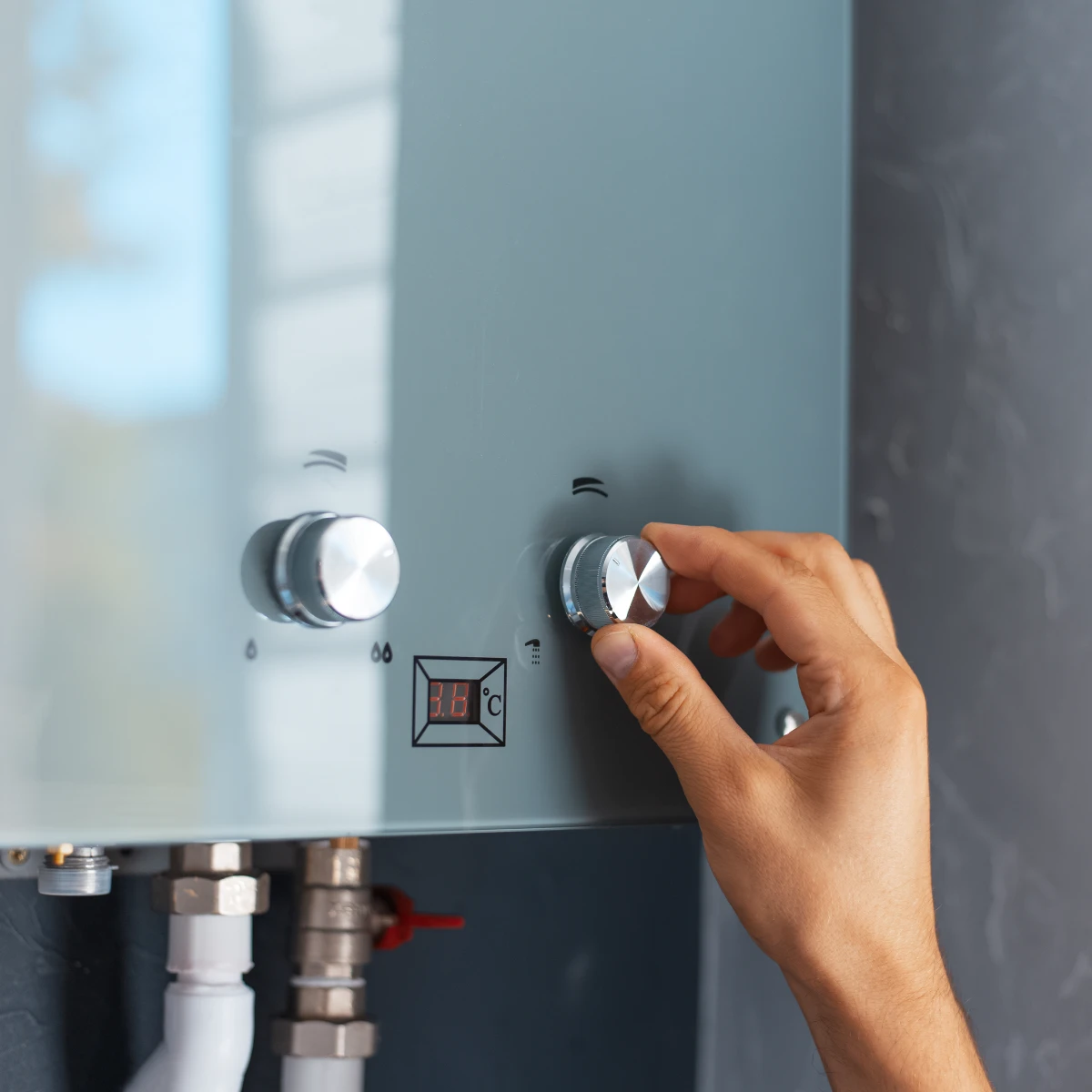
Modern combi boilers generally allow domestic hot-water temperature to be adjusted through the boiler or its controls. Lowering the setting can affect the temperature delivered at the outlet, while a higher setting may provide hotter water.
The important point is to follow the manufacturer’s instructions rather than choosing a temperature based on assumptions.
Homeowners should also remember that thermostatic mixer taps, showers and other outlets may influence the temperature experienced at the point of use.
If the temperature suddenly becomes inconsistent, that should not simply be treated as a setting issue.
Should heating and hot-water controls be explained separately?
Yes.
One of the most common sources of confusion is assuming that the heating controls and hot-water controls operate in exactly the same way.
With a combi boiler, domestic hot water is normally produced when there is demand from a tap or shower. Central heating follows the control signal from the thermostat, programmer or heating controls.
This means homeowners should understand what each control actually operates.
| Control | Main function | What homeowners should understand |
|---|---|---|
| Room thermostat | Controls room heating demand | How to set the desired temperature |
| Programmer | Sets heating schedules | When heating is scheduled to operate |
| Hot-water control | Manages relevant hot-water functions | How the boiler responds to demand |
| Preheat | Keeps hot-water components ready | Can reduce initial response time |
| Eco mode | Disables or reduces preheating on compatible models | May increase waiting time |
| Radiator valves | Adjust individual room temperatures | How to adjust rooms independently |
The exact arrangement will depend on the boiler and controls installed.
What should an installer explain about normal operation?
A useful handover should cover more than buttons and settings.
Homeowners should know what normal operation looks like.
For example, the installer can explain:
- What happens when a hot tap is opened.
- What the boiler display normally shows.
- When the appliance should fire.
- How the thermostat communicates a heating demand.
- What sounds are normal.
- How to recognise a fault code.
- Where to find the user manual.
- How to reset the boiler if the manufacturer permits homeowner resetting.
This information can prevent unnecessary concern when the boiler behaves differently from an older appliance.
A modern condensing boiler may operate at different temperatures and may modulate its output rather than simply switching fully on and off.
How should a homeowner use Eco mode?
There is no universal requirement to use Eco mode all the time.
A household that values a quicker hot-water response may prefer Preheat.
A household with lower hot-water demand may be comfortable with Eco mode and the possibility of a slightly longer wait.
The choice can depend on:
- Number of occupants.
- Frequency of hot-water use.
- Morning routines.
- Distance between boiler and main outlets.
- Preference for convenience.
- Desire to reduce preheating operation.
A good explanation allows the homeowner to make an informed choice rather than treating one setting as automatically correct.
If you have recently had a boiler installed but are unsure what the hot-water settings mean, contact CafGas CIC. Our team can help you understand the practical operation of your system and identify when a professional assessment may be needed.
What about smart heating controls?
Smart controls can provide additional ways to manage heating, depending on the product and installation.
Some allow users to adjust heating remotely through an app. Others can provide scheduling, temperature monitoring or additional automation.
However, homeowners should not assume that every smart thermostat controls every boiler function.
Compatibility matters.
Before choosing a control system, ask whether it is compatible with the boiler and whether it can use any advanced functions supported by the appliance.
The installer should explain what the control actually operates and whether any limitations apply.
Should the installer explain what not to change?
Yes.
Homeowners should know which settings are intended for normal user adjustment and which should be left to a qualified professional.
The user interface may provide access to technical parameters that affect boiler operation. These should not be changed simply because they appear adjustable.
A sensible handover should distinguish between:
Everyday controls
- Room temperature.
- Heating schedules.
- Approved hot-water settings.
- Eco or Preheat selection where applicable.
Technical settings
- Appliance configuration.
- Gas-related parameters.
- Commissioning settings.
- Service parameters.
- Other installer-level functions.
If a setting is unclear, the safest approach is to consult the manual or ask a qualified engineer rather than experimenting.
Why does hot water sometimes take time even with Preheat?
Preheat can reduce the boiler’s response time, but it cannot eliminate the time needed for water to travel through the property’s pipework.
Imagine the boiler is installed near the kitchen while the bathroom is several metres away. When the bathroom tap is opened, water already sitting in the pipe must move before the freshly heated water reaches the outlet.
The boiler can therefore be ready immediately while the tap still takes some time to become hot.
This is a normal physical limitation rather than necessarily a fault.
A homeowner should become more concerned if the waiting time suddenly increases or if the water no longer reaches its usual temperature.
What should be checked after a gas boiler installation?
After gas boiler installation Deeside, homeowners should receive appropriate documentation and understand the basic operation of the new system.
The handover should cover the relevant controls and manufacturer guidance.
It is also sensible to check that:
- The boiler display is understood.
- The thermostat is working.
- Heating responds to the controls.
- Hot-water operation is understood.
- Eco and Preheat functions have been explained where applicable.
- The user manual has been provided.
- Warranty information is available.
- Any relevant certification has been explained.
Gas Safe Register explains that registered businesses and engineers have responsibilities around gas work, including ensuring gas appliances are safe and properly checked. Homeowners can also use the Register to check whether an engineer is qualified for the work being undertaken. (gassaferegister.co.uk)
A typical installation handover
Consider a homeowner who has just had an older boiler replaced with a modern combi boiler.
The homeowner understands how to turn the heating on but is unfamiliar with the new digital display. They also do not know whether Eco mode should remain enabled.
During the handover, the installer explains the thermostat, heating schedule, hot-water settings and the difference between Preheat and Eco. They also explain that a delay at a distant bathroom tap can still occur because of the pipework.
The homeowner now knows which controls can be adjusted and which changes would warrant professional advice.
That explanation can be just as valuable as knowing where the boiler’s on/off control is located.
When should you contact an installer after setup?
A new boiler should not be treated as something homeowners have to troubleshoot alone.
If the system does not behave as explained during handover, contact the installer or an appropriately qualified engineer.
Examples include:
- Hot water is consistently colder than expected.
- The boiler repeatedly loses pressure where applicable.
- A fault code appears.
- The boiler fails to respond to a heating or hot-water demand.
- The system makes unusual noises.
- A control appears not to communicate with the boiler.
- Hot-water performance suddenly changes.
Do not remove the boiler casing or attempt internal repairs yourself.
If something does not seem right after your installation, speak to CafGas CIC. Our team can help determine whether the issue is a normal control setting, a user-interface question or something that requires professional attention.
Related articles
Which fuel powers your boiler?
At a glance
Introduction
Having a new boiler installed is only part of the job. Once the appliance is working, homeowners also need to understand how to use it properly.
This is particularly important with modern combi boilers. A new appliance may have several controls affecting heating and hot water, including Preheat, Eco mode, temperature settings, timers and programmable functions. If these are not explained clearly, useful features can easily go unused or be adjusted incorrectly.
After gas boiler installation Deeside, homeowners should know what the main controls do, which settings are intended for everyday use and when a change in performance may indicate a problem rather than a setting that needs adjusting.
Why should boiler settings be explained after installation?
A boiler can be correctly fitted and commissioned but still be confusing to operate.
Modern appliances use digital displays, symbols and control interfaces that differ between manufacturers. Two boilers can perform similar functions while using completely different menus or terminology.
A proper handover should therefore give the homeowner enough practical information to operate the system confidently.
This should include:
- How to control central heating.
- How domestic hot water is managed.
- What the main display symbols mean.
- How to adjust relevant temperatures.
- What Eco and Preheat functions do, if available.
- How the programmer or thermostat works.
- What normal operation sounds and looks like.
- Which warning signs require professional attention.
The manufacturer’s instructions remain the definitive source for model-specific operation, but a practical explanation can make those instructions much easier to understand.
If you are arranging a new installation and want the controls explained clearly, CafGas CIC can discuss the boiler’s operation with you and help make sure you understand the relevant settings from the start.
What should homeowners know about Preheat?
Preheat is designed to make a combi boiler ready for hot-water demand.
When enabled, the appliance keeps relevant components warm so it can respond more quickly when a hot tap is opened. This can reduce the initial boiler response time.
It does not mean the boiler stores a large supply of hot water.
A combi boiler generally heats mains water as it passes through the appliance. Even with Preheat enabled, hot water still has to travel from the boiler to the tap through the pipework.
That distinction matters because homeowners may otherwise expect instant hot water from every outlet.
What should the installer explain?
A homeowner should understand:
- Whether the boiler has a Preheat function.
- How to identify whether it is enabled.
- How to change the setting if the manufacturer permits this.
- What difference the setting can make.
- Why pipework can still cause some waiting time.
This makes it easier to set realistic expectations about hot-water delivery.
What does Eco mode do?
Eco mode generally disables the hot-water preheat function on compatible combi boilers.
Instead of keeping the appliance ready for immediate hot-water demand, the boiler waits until a tap is opened and then responds.
This can reduce the energy used for preheating, although the exact effect depends on the appliance and how the household uses hot water.
The trade-off is that hot water may take slightly longer to arrive.
Eco mode does not normally mean that hot water has been switched off. The boiler can still heat water when a demand occurs.
A homeowner should therefore know whether selecting Eco mode is changing hot-water availability or simply changing how the boiler prepares for demand.
Which hot-water temperature should be set?
The correct temperature depends on the boiler model and the homeowner’s needs.
Modern combi boilers generally allow domestic hot-water temperature to be adjusted through the boiler or its controls. Lowering the setting can affect the temperature delivered at the outlet, while a higher setting may provide hotter water.
The important point is to follow the manufacturer’s instructions rather than choosing a temperature based on assumptions.
Homeowners should also remember that thermostatic mixer taps, showers and other outlets may influence the temperature experienced at the point of use.
If the temperature suddenly becomes inconsistent, that should not simply be treated as a setting issue.
Should heating and hot-water controls be explained separately?
Yes.
One of the most common sources of confusion is assuming that the heating controls and hot-water controls operate in exactly the same way.
With a combi boiler, domestic hot water is normally produced when there is demand from a tap or shower. Central heating follows the control signal from the thermostat, programmer or heating controls.
This means homeowners should understand what each control actually operates.
| Control | Main function | What homeowners should understand |
|---|---|---|
| Room thermostat | Controls room heating demand | How to set the desired temperature |
| Programmer | Sets heating schedules | When heating is scheduled to operate |
| Hot-water control | Manages relevant hot-water functions | How the boiler responds to demand |
| Preheat | Keeps hot-water components ready | Can reduce initial response time |
| Eco mode | Disables or reduces preheating on compatible models | May increase waiting time |
| Radiator valves | Adjust individual room temperatures | How to adjust rooms independently |
The exact arrangement will depend on the boiler and controls installed.
What should an installer explain about normal operation?
A useful handover should cover more than buttons and settings.
Homeowners should know what normal operation looks like.
For example, the installer can explain:
- What happens when a hot tap is opened.
- What the boiler display normally shows.
- When the appliance should fire.
- How the thermostat communicates a heating demand.
- What sounds are normal.
- How to recognise a fault code.
- Where to find the user manual.
- How to reset the boiler if the manufacturer permits homeowner resetting.
This information can prevent unnecessary concern when the boiler behaves differently from an older appliance.
A modern condensing boiler may operate at different temperatures and may modulate its output rather than simply switching fully on and off.
How should a homeowner use Eco mode?
There is no universal requirement to use Eco mode all the time.
A household that values a quicker hot-water response may prefer Preheat.
A household with lower hot-water demand may be comfortable with Eco mode and the possibility of a slightly longer wait.
The choice can depend on:
- Number of occupants.
- Frequency of hot-water use.
- Morning routines.
- Distance between boiler and main outlets.
- Preference for convenience.
- Desire to reduce preheating operation.
A good explanation allows the homeowner to make an informed choice rather than treating one setting as automatically correct.
If you have recently had a boiler installed but are unsure what the hot-water settings mean, contact CafGas CIC. Our team can help you understand the practical operation of your system and identify when a professional assessment may be needed.
What about smart heating controls?
Smart controls can provide additional ways to manage heating, depending on the product and installation.
Some allow users to adjust heating remotely through an app. Others can provide scheduling, temperature monitoring or additional automation.
However, homeowners should not assume that every smart thermostat controls every boiler function.
Compatibility matters.
Before choosing a control system, ask whether it is compatible with the boiler and whether it can use any advanced functions supported by the appliance.
The installer should explain what the control actually operates and whether any limitations apply.
Should the installer explain what not to change?
Yes.
Homeowners should know which settings are intended for normal user adjustment and which should be left to a qualified professional.
The user interface may provide access to technical parameters that affect boiler operation. These should not be changed simply because they appear adjustable.
A sensible handover should distinguish between:
Everyday controls
- Room temperature.
- Heating schedules.
- Approved hot-water settings.
- Eco or Preheat selection where applicable.
Technical settings
- Appliance configuration.
- Gas-related parameters.
- Commissioning settings.
- Service parameters.
- Other installer-level functions.
If a setting is unclear, the safest approach is to consult the manual or ask a qualified engineer rather than experimenting.
Why does hot water sometimes take time even with Preheat?
Preheat can reduce the boiler’s response time, but it cannot eliminate the time needed for water to travel through the property’s pipework.
Imagine the boiler is installed near the kitchen while the bathroom is several metres away. When the bathroom tap is opened, water already sitting in the pipe must move before the freshly heated water reaches the outlet.
The boiler can therefore be ready immediately while the tap still takes some time to become hot.
This is a normal physical limitation rather than necessarily a fault.
A homeowner should become more concerned if the waiting time suddenly increases or if the water no longer reaches its usual temperature.
What should be checked after a gas boiler installation?
After gas boiler installation Deeside, homeowners should receive appropriate documentation and understand the basic operation of the new system.
The handover should cover the relevant controls and manufacturer guidance.
It is also sensible to check that:
- The boiler display is understood.
- The thermostat is working.
- Heating responds to the controls.
- Hot-water operation is understood.
- Eco and Preheat functions have been explained where applicable.
- The user manual has been provided.
- Warranty information is available.
- Any relevant certification has been explained.
Gas Safe Register explains that registered businesses and engineers have responsibilities around gas work, including ensuring gas appliances are safe and properly checked. Homeowners can also use the Register to check whether an engineer is qualified for the work being undertaken. (gassaferegister.co.uk)
A typical installation handover
Consider a homeowner who has just had an older boiler replaced with a modern combi boiler.
The homeowner understands how to turn the heating on but is unfamiliar with the new digital display. They also do not know whether Eco mode should remain enabled.
During the handover, the installer explains the thermostat, heating schedule, hot-water settings and the difference between Preheat and Eco. They also explain that a delay at a distant bathroom tap can still occur because of the pipework.
The homeowner now knows which controls can be adjusted and which changes would warrant professional advice.
That explanation can be just as valuable as knowing where the boiler’s on/off control is located.
When should you contact an installer after setup?
A new boiler should not be treated as something homeowners have to troubleshoot alone.
If the system does not behave as explained during handover, contact the installer or an appropriately qualified engineer.
Examples include:
- Hot water is consistently colder than expected.
- The boiler repeatedly loses pressure where applicable.
- A fault code appears.
- The boiler fails to respond to a heating or hot-water demand.
- The system makes unusual noises.
- A control appears not to communicate with the boiler.
- Hot-water performance suddenly changes.
Do not remove the boiler casing or attempt internal repairs yourself.
If something does not seem right after your installation, speak to CafGas CIC. Our team can help determine whether the issue is a normal control setting, a user-interface question or something that requires professional attention.


