 Up to 12 year labour warranty



Combi Boiler Replacement Deeside: Will a New Boiler Reduce Hot-Water Waiting Time?
Waiting for hot water can become one of those small daily frustrations that you simply get used to. You turn on the tap, wait for the water to warm up and wonder whether a newer boiler would make a noticeable difference.

Why you can trust our content
At CafGas CIC, we know choosing a new boiler can feel overwhelming, especially with so much conflicting advice online. That’s why we focus on clear guidance, honest recommendations, and trusted expertise to help homeowners make informed decisions about their heating systems.
A new boiler can improve hot-water performance in some situations, but replacement does not automatically mean instant hot water. The time it takes for hot water to reach a tap can depend on the boiler, water flow, pipework layout, controls and the distance between the appliance and outlet.
If you are considering a combi boiler replacement deeside, it is therefore worth understanding what a new boiler can actually change before making a decision.
If slow hot water is one of the reasons you are considering replacement, CafGas CIC can assess the existing setup and explain what a new boiler could realistically improve.
Why does hot water take time to reach a tap?
A combi boiler heats water when there is a demand from a tap or shower. Once the appliance responds, the heated water still has to travel through the pipework to reach the outlet.
That means the boiler cannot necessarily provide hot water at the tap immediately.
The waiting time can be influenced by:
- Distance between the boiler and outlet
- Length and arrangement of the hot-water pipework
- Water flow rate
- Boiler response
- Hot-water settings
- Pipework diameter
- The temperature of water already sitting in the pipe
For example, a kitchen tap close to the boiler may receive hot water relatively quickly, while a bathroom at the other end of the property may take longer.
This is important because replacing the boiler does not physically shorten the distance between the appliance and the tap.
Can a new combi boiler provide hot water faster?
It can, depending on the existing system and the replacement boiler.
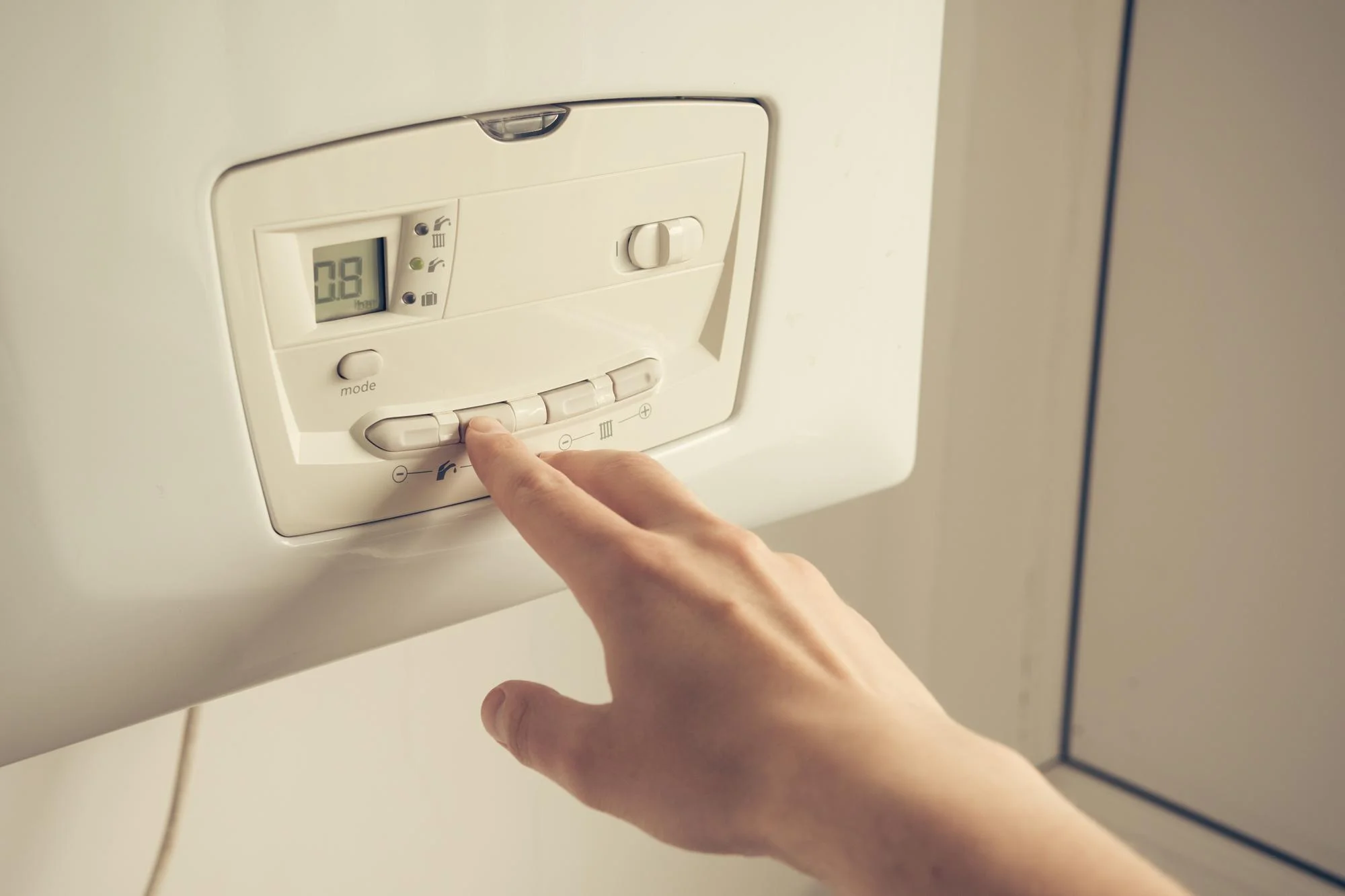
Modern combi boilers may have features designed to improve hot-water responsiveness. Some models offer preheat or comfort functions that keep part of the system warm so that hot water can be delivered more quickly when a tap is opened.
However, there is a difference between the boiler responding quickly and hot water actually reaching the tap.
If the main delay is caused by long pipework, a new boiler alone may not remove that waiting period.
This is why a proper assessment is more useful than assuming that every newer appliance will provide instant hot water.
What can a boiler replacement actually improve?
There are several areas where replacement may make a noticeable difference.
A newer appliance may provide:
- More consistent hot-water performance
- Better control over hot-water temperature
- Improved response to demand
- Modern Eco or Preheat functions
- More suitable controls
- Improved reliability if the existing boiler is deteriorating
- Better compatibility with modern heating controls
The extent of the improvement depends on what is wrong with the existing system and what is being installed as its replacement.
For instance, if the existing boiler has developed a fault affecting hot-water performance, replacement could resolve the underlying appliance issue.
If the delay is mainly due to pipework, however, the improvement may be more limited.
Is boiler size the main factor in hot-water waiting time?
Not always.
A combi boiler’s hot-water output is important because it affects how much hot water the appliance can heat at a given flow rate. But a higher-output boiler does not automatically mean hot water will reach the tap instantly.
Imagine a boiler located downstairs with a bathroom at the opposite end of the property. Even if the replacement appliance can heat water quickly, the water still has to travel through the pipework.
The distinction is important:
Boiler response: How quickly the appliance reacts and heats the incoming water.
Hot-water delivery: How long it takes for that heated water to travel to the outlet.
Both can affect what you experience when you open a tap.
Could the existing boiler be the reason hot water is slow?
Yes, but it is only one possibility.
If hot water has gradually become slower or less reliable, there may be an issue with the appliance or another part of the system.
Potential signs that the boiler itself may need attention include:
- Hot water temperature fluctuates significantly
- The boiler repeatedly stops during hot-water demand
- Hot water becomes unreliable
- The boiler displays fault codes
- Water is much cooler than expected
- The appliance makes unusual noises
- Hot-water performance has noticeably deteriorated
In these circumstances, repair may be worth considering before replacement.
A boiler does not automatically need replacing simply because hot water is slow.
If your existing system is becoming unreliable, CafGas CIC can help establish whether the issue is likely to be a repair, settings problem or a reason to consider replacement.
When might replacement make more sense than repair?
The decision depends on the condition, age and performance of the existing appliance, as well as the likely cost and practicality of further repairs.
Replacement may be considered when:
- The boiler has become unreliable
- Faults are becoming more frequent
- Replacement parts are difficult or costly to source
- The appliance is no longer meeting household demand
- You want updated controls
- The existing system has significant limitations
- A repair would only provide a short-term solution
On the other hand, a relatively sound boiler with a straightforward issue may not need replacing.
A qualified engineer can help distinguish between an appliance problem and a limitation caused by the property’s pipework or system arrangement.
How does preheat mode affect waiting time?
Some combi boilers include a preheat, comfort or similar function.
The exact operation varies between manufacturers and models, but the basic idea is to keep the boiler prepared to respond to hot-water demand more quickly.
This can reduce the time before heated water is available from the appliance.
However, it does not eliminate the distance between the boiler and the tap.
For example, if the boiler is located close to the kitchen, preheat may make a noticeable difference there. A bathroom several metres away may still have a delay because the water needs to travel through the pipework.
Preheat can therefore be useful, but it should not be treated as a guarantee of instant hot water throughout the property.
What about Eco mode?
Eco settings are designed to alter how certain boiler functions operate, depending on the model.
On some combi boilers, switching away from a preheat or comfort function may mean the boiler does not keep itself prepared in the same way for hot-water demand.
This can potentially increase the waiting time for hot water, although the exact behaviour depends on the appliance.
If you notice a difference after changing an Eco or Preheat setting, check the manufacturer’s instructions or ask your installer for guidance.
It is better to understand what the setting controls than to assume that one mode is always more efficient or more suitable.
What else should be checked before replacing the boiler?
Before arranging a combi boiler replacement deeside, it is useful to look at the complete hot-water setup rather than focusing only on the boiler.
An installer may consider:
| Area | Why it matters |
| Existing boiler | Determines whether the appliance is contributing to the problem |
| Hot-water flow rate | Influences the amount of heated water available |
| Pipework | Affects how quickly hot water reaches outlets |
| Boiler location | Influences the distance to taps and showers |
| Controls | Can affect operation and user settings |
| Hot-water settings | Preheat and Eco functions may alter response |
| Household demand | Helps determine suitable boiler output |
| Existing faults | May indicate repair rather than replacement |
This broader assessment can help prevent unrealistic expectations.
A replacement should be based on the home’s requirements, not simply on the assumption that a newer boiler will solve every hot-water delay.
How much should you budget for a combi boiler replacement?
The boiler replacement cost can vary significantly because there is no single price that applies to every property.
The final figure may depend on:
- Boiler model and output
- Controls selected
- Installation complexity
- Existing boiler location
- Flue requirements
- Pipework changes
- Removal and disposal
- Additional system components
- Any remedial work required
A straightforward replacement in the same location may involve less work than an installation where the boiler needs relocating or the existing system requires modification.
This is why it is useful to request a quotation based on your property’s actual requirements rather than relying solely on general online prices.
Can spending more on a boiler guarantee faster hot water?
No.
A more expensive boiler may offer different specifications or features, but the price alone does not guarantee shorter waiting times at every outlet.
Consider a simple example.
A boiler is located close to the kitchen but several metres from the upstairs bathroom. A new high-output appliance may heat the water quickly, but the bathroom still has to receive that water through the existing pipework.
In this situation, paying more for boiler output may not address the main cause of the delay.
The useful question is not simply “Which boiler is fastest?” It is “What is causing the delay in this property, and will the proposed replacement address it?”
What if the waiting time has suddenly increased?
A sudden change is different from a long-standing delay.
If hot water used to arrive reasonably quickly but has recently become slow, cold or unreliable, this could indicate a developing problem.
Possible causes may include:
- Boiler faults
- Sensor issues
- Reduced water flow
- A control problem
- Changes to boiler settings
- Other system faults
If the change is sudden, do not automatically assume that the boiler needs replacing.
A professional assessment can help determine whether the issue can be repaired without replacing the appliance.
Could pipework changes improve hot-water delivery?
In some properties, pipework may contribute significantly to waiting time.
If the hot-water outlet is a long distance from the boiler, the water already sitting in the pipe needs to pass through before heated water arrives.
Changing pipework can sometimes be considered during a larger renovation or heating project, but it is not always practical or necessary simply to reduce a short waiting period.
The installer should explain whether any proposed changes are justified and what they would involve.
This is another reason why an assessment before replacement can be useful.
How should you compare the cost of replacement?
When considering the boiler replacement cost, avoid comparing the boiler price alone.
Look at the complete proposal, including:
- Boiler specification
- Controls
- Installation
- Removal of the existing appliance
- Flue arrangements
- Pipework
- Additional components
- Commissioning
- Warranty
- Aftercare
Also consider the reason for replacement.
If the existing boiler is unreliable, inefficient or becoming increasingly difficult to repair, replacement may solve several problems at once.
If the only concern is a modest hot-water delay, however, it may be worth establishing whether a setting adjustment or repair could address the issue first.
Related articles
Which fuel powers your boiler?
At a glance
A new boiler can improve hot-water performance in some situations, but replacement does not automatically mean instant hot water. The time it takes for hot water to reach a tap can depend on the boiler, water flow, pipework layout, controls and the distance between the appliance and outlet.
If you are considering a combi boiler replacement deeside, it is therefore worth understanding what a new boiler can actually change before making a decision.
If slow hot water is one of the reasons you are considering replacement, CafGas CIC can assess the existing setup and explain what a new boiler could realistically improve.
Why does hot water take time to reach a tap?
A combi boiler heats water when there is a demand from a tap or shower. Once the appliance responds, the heated water still has to travel through the pipework to reach the outlet.
That means the boiler cannot necessarily provide hot water at the tap immediately.
The waiting time can be influenced by:
- Distance between the boiler and outlet
- Length and arrangement of the hot-water pipework
- Water flow rate
- Boiler response
- Hot-water settings
- Pipework diameter
- The temperature of water already sitting in the pipe
For example, a kitchen tap close to the boiler may receive hot water relatively quickly, while a bathroom at the other end of the property may take longer.
This is important because replacing the boiler does not physically shorten the distance between the appliance and the tap.
Can a new combi boiler provide hot water faster?
It can, depending on the existing system and the replacement boiler.
Modern combi boilers may have features designed to improve hot-water responsiveness. Some models offer preheat or comfort functions that keep part of the system warm so that hot water can be delivered more quickly when a tap is opened.
However, there is a difference between the boiler responding quickly and hot water actually reaching the tap.
If the main delay is caused by long pipework, a new boiler alone may not remove that waiting period.
This is why a proper assessment is more useful than assuming that every newer appliance will provide instant hot water.
What can a boiler replacement actually improve?
There are several areas where replacement may make a noticeable difference.
A newer appliance may provide:
- More consistent hot-water performance
- Better control over hot-water temperature
- Improved response to demand
- Modern Eco or Preheat functions
- More suitable controls
- Improved reliability if the existing boiler is deteriorating
- Better compatibility with modern heating controls
The extent of the improvement depends on what is wrong with the existing system and what is being installed as its replacement.
For instance, if the existing boiler has developed a fault affecting hot-water performance, replacement could resolve the underlying appliance issue.
If the delay is mainly due to pipework, however, the improvement may be more limited.
Is boiler size the main factor in hot-water waiting time?
Not always.
A combi boiler’s hot-water output is important because it affects how much hot water the appliance can heat at a given flow rate. But a higher-output boiler does not automatically mean hot water will reach the tap instantly.
Imagine a boiler located downstairs with a bathroom at the opposite end of the property. Even if the replacement appliance can heat water quickly, the water still has to travel through the pipework.
The distinction is important:
Boiler response: How quickly the appliance reacts and heats the incoming water.
Hot-water delivery: How long it takes for that heated water to travel to the outlet.
Both can affect what you experience when you open a tap.
Could the existing boiler be the reason hot water is slow?
Yes, but it is only one possibility.
If hot water has gradually become slower or less reliable, there may be an issue with the appliance or another part of the system.
Potential signs that the boiler itself may need attention include:
- Hot water temperature fluctuates significantly
- The boiler repeatedly stops during hot-water demand
- Hot water becomes unreliable
- The boiler displays fault codes
- Water is much cooler than expected
- The appliance makes unusual noises
- Hot-water performance has noticeably deteriorated
In these circumstances, repair may be worth considering before replacement.
A boiler does not automatically need replacing simply because hot water is slow.
If your existing system is becoming unreliable, CafGas CIC can help establish whether the issue is likely to be a repair, settings problem or a reason to consider replacement.
When might replacement make more sense than repair?
The decision depends on the condition, age and performance of the existing appliance, as well as the likely cost and practicality of further repairs.
Replacement may be considered when:
- The boiler has become unreliable
- Faults are becoming more frequent
- Replacement parts are difficult or costly to source
- The appliance is no longer meeting household demand
- You want updated controls
- The existing system has significant limitations
- A repair would only provide a short-term solution
On the other hand, a relatively sound boiler with a straightforward issue may not need replacing.
A qualified engineer can help distinguish between an appliance problem and a limitation caused by the property’s pipework or system arrangement.
How does preheat mode affect waiting time?
Some combi boilers include a preheat, comfort or similar function.
The exact operation varies between manufacturers and models, but the basic idea is to keep the boiler prepared to respond to hot-water demand more quickly.
This can reduce the time before heated water is available from the appliance.
However, it does not eliminate the distance between the boiler and the tap.
For example, if the boiler is located close to the kitchen, preheat may make a noticeable difference there. A bathroom several metres away may still have a delay because the water needs to travel through the pipework.
Preheat can therefore be useful, but it should not be treated as a guarantee of instant hot water throughout the property.
What about Eco mode?
Eco settings are designed to alter how certain boiler functions operate, depending on the model.
On some combi boilers, switching away from a preheat or comfort function may mean the boiler does not keep itself prepared in the same way for hot-water demand.
This can potentially increase the waiting time for hot water, although the exact behaviour depends on the appliance.
If you notice a difference after changing an Eco or Preheat setting, check the manufacturer’s instructions or ask your installer for guidance.
It is better to understand what the setting controls than to assume that one mode is always more efficient or more suitable.
What else should be checked before replacing the boiler?
Before arranging a combi boiler replacement deeside, it is useful to look at the complete hot-water setup rather than focusing only on the boiler.
An installer may consider:
| Area | Why it matters |
| Existing boiler | Determines whether the appliance is contributing to the problem |
| Hot-water flow rate | Influences the amount of heated water available |
| Pipework | Affects how quickly hot water reaches outlets |
| Boiler location | Influences the distance to taps and showers |
| Controls | Can affect operation and user settings |
| Hot-water settings | Preheat and Eco functions may alter response |
| Household demand | Helps determine suitable boiler output |
| Existing faults | May indicate repair rather than replacement |
This broader assessment can help prevent unrealistic expectations.
A replacement should be based on the home’s requirements, not simply on the assumption that a newer boiler will solve every hot-water delay.
How much should you budget for a combi boiler replacement?
The boiler replacement cost can vary significantly because there is no single price that applies to every property.
The final figure may depend on:
- Boiler model and output
- Controls selected
- Installation complexity
- Existing boiler location
- Flue requirements
- Pipework changes
- Removal and disposal
- Additional system components
- Any remedial work required
A straightforward replacement in the same location may involve less work than an installation where the boiler needs relocating or the existing system requires modification.
This is why it is useful to request a quotation based on your property’s actual requirements rather than relying solely on general online prices.
Can spending more on a boiler guarantee faster hot water?
No.
A more expensive boiler may offer different specifications or features, but the price alone does not guarantee shorter waiting times at every outlet.
Consider a simple example.
A boiler is located close to the kitchen but several metres from the upstairs bathroom. A new high-output appliance may heat the water quickly, but the bathroom still has to receive that water through the existing pipework.
In this situation, paying more for boiler output may not address the main cause of the delay.
The useful question is not simply “Which boiler is fastest?” It is “What is causing the delay in this property, and will the proposed replacement address it?”
What if the waiting time has suddenly increased?
A sudden change is different from a long-standing delay.
If hot water used to arrive reasonably quickly but has recently become slow, cold or unreliable, this could indicate a developing problem.
Possible causes may include:
- Boiler faults
- Sensor issues
- Reduced water flow
- A control problem
- Changes to boiler settings
- Other system faults
If the change is sudden, do not automatically assume that the boiler needs replacing.
A professional assessment can help determine whether the issue can be repaired without replacing the appliance.
Could pipework changes improve hot-water delivery?
In some properties, pipework may contribute significantly to waiting time.
If the hot-water outlet is a long distance from the boiler, the water already sitting in the pipe needs to pass through before heated water arrives.
Changing pipework can sometimes be considered during a larger renovation or heating project, but it is not always practical or necessary simply to reduce a short waiting period.
The installer should explain whether any proposed changes are justified and what they would involve.
This is another reason why an assessment before replacement can be useful.
How should you compare the cost of replacement?
When considering the boiler replacement cost, avoid comparing the boiler price alone.
Look at the complete proposal, including:
- Boiler specification
- Controls
- Installation
- Removal of the existing appliance
- Flue arrangements
- Pipework
- Additional components
- Commissioning
- Warranty
- Aftercare
Also consider the reason for replacement.
If the existing boiler is unreliable, inefficient or becoming increasingly difficult to repair, replacement may solve several problems at once.
If the only concern is a modest hot-water delay, however, it may be worth establishing whether a setting adjustment or repair could address the issue first.


