 Up to 12 year labour warranty


Gas Boiler Cover Cost vs Emergency Repair Cost: Which Risk Are You Managing?
Most homeowners do not think about boiler risk until something goes wrong. When the heating is working, it is easy to delay servicing, cover plans and repair planning. When the boiler fails, the decision can suddenly feel urgent, especially during cold weather or when there are children, elderly relatives or vulnerable people at home. That…

Why you can trust our content
At CafGas CIC, we know choosing a new boiler can feel overwhelming, especially with so much conflicting advice online. That’s why we focus on clear guidance, honest recommendations, and trusted expertise to help homeowners make informed decisions about their heating systems.

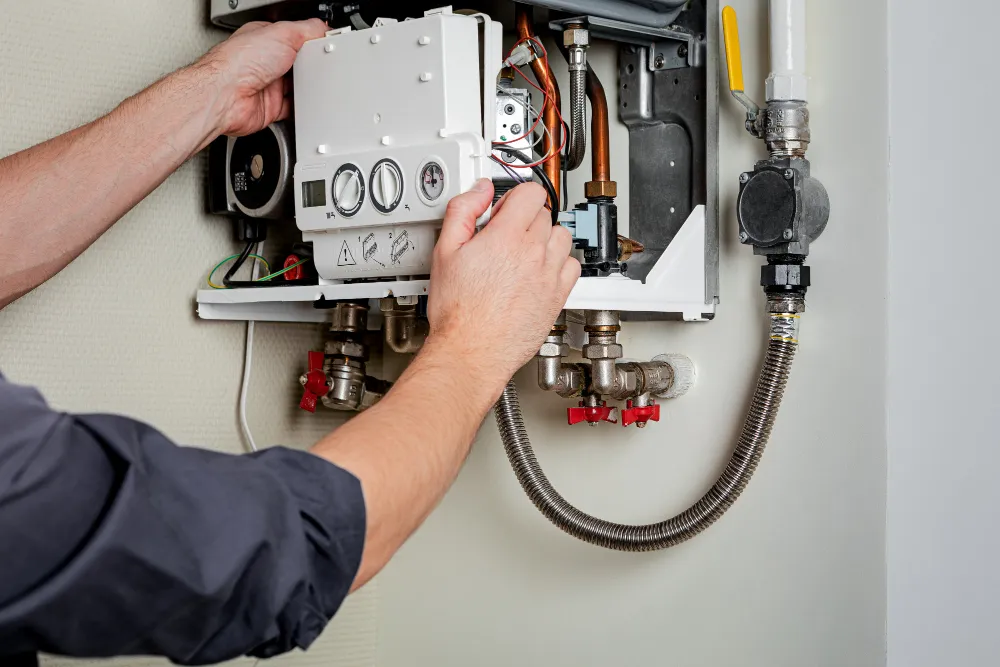
Most homeowners do not think about boiler risk until something goes wrong. When the heating is working, it is easy to delay servicing, cover plans and repair planning. When the boiler fails, the decision can suddenly feel urgent, especially during cold weather or when there are children, elderly relatives or vulnerable people at home.
That is why many homeowners compare the gas boiler cover cost with the potential cost of emergency repairs. One option gives you planned support through a cover or care plan. The other means paying when a fault happens. Neither route is automatically right for every home, but understanding the difference can help you manage the risk sensibly.
This guide explains how boiler cover and emergency repair costs compare, what affects each option and how to decide which approach fits your boiler, budget and household needs.
What is boiler cover designed to do?
Boiler cover is designed to give homeowners a more organised way to manage boiler servicing and certain repair situations. Depending on the plan, it may include annual servicing, breakdown support, parts, labour and safety checks.
A cover plan may help if you want:
- A planned annual boiler service
- A clear route for support if the boiler fails
- More predictable monthly or annual payments
- Help with covered repair costs
- Less stress when something goes wrong
- Ongoing advice from a local heating team
- Support with long-term boiler care
The important point is that every plan is different. Some plans are basic, while others include wider central heating support. Always check the terms before joining.
What is emergency boiler repair?
Emergency boiler repair usually means calling an engineer when your boiler has failed suddenly, or there is an urgent heating or hot water issue. This could happen during the evening, on the weekend, in winter or when the household cannot safely wait for a standard appointment.
Emergency support may be needed if:
- You have no heating or hot water
- The boiler is leaking heavily
- The boiler will not ignite
- Pressure keeps dropping rapidly
- The system keeps cutting out
- There is a fault affecting vulnerable people in the home
- A serious issue appears during cold weather
If you smell gas or suspect carbon monoxide, you should not wait for a normal repair visit. Turn off the gas at the meter if safe, open windows, avoid electrical switches and contact the National Gas Emergency Service immediately.
How do the costs compare?
The gas boiler cover cost is usually planned. You may pay monthly or annually for a set level of protection. Emergency repairs are usually reactive. You pay when something happens, and the final cost depends on the fault, parts, timing and urgency.
| Option | How it works | Main risk managed |
| Boiler cover | Planned payments for agreed support | Reduces uncertainty around servicing and selected repairs |
| Pay-as-you-go repairs | You pay only when a fault occurs | Avoids monthly payments but leaves repair cost unpredictable |
| Emergency repair | Urgent engineer support when the boiler fails | Solves immediate breakdown but may cost more due to urgency |
| Annual servicing only | Planned yearly safety and performance check | Helps reduce risk but may not include breakdown support |
The better option depends on whether you prefer predictable support or are comfortable paying for repairs only when needed.
What affects gas boiler cover cost?
Gas boiler cover cost can vary depending on the level of support included. A basic plan may cost less, while a more comprehensive plan with parts, labour and wider heating support may cost more.
Common factors include:
- Whether annual servicing is included
- Whether parts are included
- Whether labour is included
- Boiler age
- Boiler condition
- Boiler make and model
- Whether central heating is included
- Excess fees
- Callout limits
- Claim limits
- Response terms
- Monthly or annual payment structure
A low monthly cost may look attractive, but it should be checked carefully. If the plan has high excess fees, limited callouts or major exclusions, it may not provide the reassurance you expect.
What affects boiler repair cost?
Boiler repair cost depends on the nature of the fault and how much work is needed to resolve it. Some repairs are simple. Others require specialist parts, more time or deeper investigation.
Repair pricing can be affected by:
- Fault type
- Boiler age
- Part availability
- Labour time
- Whether more than one fault is present
- Access around the boiler
- Whether the fault is intermittent
- Whether the wider heating system is involved
- Whether the issue is urgent
- Whether the boiler has been serviced regularly
For example, a faulty sensor is usually different from a pump, fan, heat exchanger or printed circuit board issue. The more complex the fault, the more the repair may cost.
Why can emergency repairs cost more?
Emergency boiler repair costs can be higher because of timing and urgency. If you need help outside normal working hours, during winter, on the weekend or when the fault cannot wait, the visit may cost more than a planned appointment.
Emergency costs may be affected by:
- Time of day
- Weekend or bank holiday attendance
- Urgency of the issue
- Whether parts are immediately available
- Labour is required to make the system safe
- Whether a temporary repair is needed
- Whether follow-up work is required
- Travel and availability
- Complexity of diagnosis
An emergency repair may be unavoidable if the boiler fails suddenly. However, regular servicing and early attention to warning signs can reduce the chance of being forced into urgent decisions.
Is a boiler cover always cheaper than emergency repair?
No. A boiler cover is not automatically cheaper. If your boiler is new, reliable and under warranty, you may rarely need repairs. In that situation, paying for repairs only when needed may feel more economical.
However, cover may feel better value if:
- Your boiler is older but still serviceable
- You want annual servicing included
- You prefer predictable payments
- You do not want to arrange emergency help from scratch
- You rely heavily on heating and hot water
- You want local support
- You want fewer surprises if the boiler fails
The decision is not only financial. It is also about convenience, risk and peace of mind.
Which fuel powers your boiler?
It just takes 2 minutes
And then you can book a free consultation
When might pay-as-you-go repairs make sense?
Pay-as-you-go repairs can make sense for homeowners who are comfortable dealing with faults as they happen. This may suit you if your boiler is newer, under warranty or well-maintained.
This route may be suitable if:
- Your boiler is still covered by warranty
- You have savings set aside for repairs
- You do not want a monthly plan
- The boiler has a strong service history
- You rarely experience issues
- You are comfortable arranging engineer visits when needed
The risk is that repair bills can be unpredictable. If the fault happens at an inconvenient time, such as during a cold weekend, the cost and stress may be higher.
When might boiler cover make more sense?
A boiler cover may be more suitable if you want structured support and do not want to deal with each breakdown as a separate problem.
It may be worth considering if:
- Your boiler is out of warranty
- You want servicing included
- Your household cannot easily manage a heating loss
- You prefer planned payments
- You want one company to look after the system
- You have had previous boiler faults
- You want a clearer aftercare route
Before joining, check whether the plan accepts your boiler’s age and condition. Some providers may exclude older boilers or pre-existing faults.
What exclusions should you check?
Exclusions matter because they define what the plan will not cover. A plan can sound reassuring but still leave out the issue you are most worried about.
Check whether the plan excludes:
- Pre-existing faults
- Sludge or poor water quality
- Scale damage
- Boilers over a certain age
- Lack of servicing
- Flue issues
- Controls or thermostats
- Radiators and pipework
- Full boiler replacement
- Cosmetic damage
- Faults caused by poor installation
- Damage from external issues
If something is unclear, ask for a plain English explanation before agreeing.
Example scenario: cover versus emergency repair
A Deeside homeowner has an eight-year-old boiler that is out of warranty. The boiler generally works well, but they want annual servicing and a clear contact if it breaks down during winter. For them, a cover plan may provide useful reassurance.
Another homeowner has a much newer boiler with a long warranty and a recent service history. They may decide that annual servicing and pay-as-you-go repairs are enough for now.
A third homeowner has a 14-year-old boiler with repeated faults. In that case, neither cover nor repeated emergency repairs may be the best answer. Replacement may need to be discussed if the boiler is becoming unreliable or uneconomical to maintain.
How can servicing reduce risk?
Annual servicing is one of the most practical ways to reduce boiler risk. It does not guarantee that faults will never happen, but it can help spot early warning signs and maintain safe operation.
A service may include checks on:
- Boiler condition
- Safety components
- Flue performance
- Combustion
- Seals
- Controls
- Leaks or corrosion
- General operation
Servicing can also support warranty requirements on newer boilers. Whether you choose cover or pay-as-you-go repairs, annual servicing is still important.
What questions should you ask before deciding?
Before choosing between cover and pay-as-you-go repairs, ask yourself and your provider practical questions.
Useful questions include:
- Is my boiler still under warranty?
- How old is my boiler?
- Has it had recent faults?
- Do I want annual servicing included?
- Can I manage an unexpected repair bill?
- Are parts and labour included in the cover?
- Is there an excess per callout?
- Are there callout limits?
- Are pre-existing faults excluded?
- What happens if the boiler cannot be repaired?
- Would replacement be more sensible than cover?
- Do I prefer planned payments or flexible repair spending?
The right answer depends on your boiler and your comfort with risk.
Final thoughts
Boiler cover and emergency repairs manage different types of risk. Cover can make servicing and selected breakdown support more predictable. Pay-as-you-go repairs may suit newer or well-maintained boilers, but emergency faults can be stressful and unpredictable.
CafGas CIC can help you understand your options and choose sensible support for your heating system. If you are comparing gas boiler cover cost, boiler repair cost or emergency boiler repair cost, contact our team for practical advice and local guidance.
Related articles

Which fuel powers your boiler?
At a glance
Most homeowners do not think about boiler risk until something goes wrong. When the heating is working, it is easy to delay servicing, cover plans and repair planning. When the boiler fails, the decision can suddenly feel urgent, especially during cold weather or when there are children, elderly relatives or vulnerable people at home.
That is why many homeowners compare the gas boiler cover cost with the potential cost of emergency repairs. One option gives you planned support through a cover or care plan. The other means paying when a fault happens. Neither route is automatically right for every home, but understanding the difference can help you manage the risk sensibly.
This guide explains how boiler cover and emergency repair costs compare, what affects each option and how to decide which approach fits your boiler, budget and household needs.
What is boiler cover designed to do?
Boiler cover is designed to give homeowners a more organised way to manage boiler servicing and certain repair situations. Depending on the plan, it may include annual servicing, breakdown support, parts, labour and safety checks.
A cover plan may help if you want:
- A planned annual boiler service
- A clear route for support if the boiler fails
- More predictable monthly or annual payments
- Help with covered repair costs
- Less stress when something goes wrong
- Ongoing advice from a local heating team
- Support with long-term boiler care
The important point is that every plan is different. Some plans are basic, while others include wider central heating support. Always check the terms before joining.
What is emergency boiler repair?
Emergency boiler repair usually means calling an engineer when your boiler has failed suddenly, or there is an urgent heating or hot water issue. This could happen during the evening, on the weekend, in winter or when the household cannot safely wait for a standard appointment.
Emergency support may be needed if:
- You have no heating or hot water
- The boiler is leaking heavily
- The boiler will not ignite
- Pressure keeps dropping rapidly
- The system keeps cutting out
- There is a fault affecting vulnerable people in the home
- A serious issue appears during cold weather
If you smell gas or suspect carbon monoxide, you should not wait for a normal repair visit. Turn off the gas at the meter if safe, open windows, avoid electrical switches and contact the National Gas Emergency Service immediately.
How do the costs compare?
The gas boiler cover cost is usually planned. You may pay monthly or annually for a set level of protection. Emergency repairs are usually reactive. You pay when something happens, and the final cost depends on the fault, parts, timing and urgency.
| Option | How it works | Main risk managed |
| Boiler cover | Planned payments for agreed support | Reduces uncertainty around servicing and selected repairs |
| Pay-as-you-go repairs | You pay only when a fault occurs | Avoids monthly payments but leaves repair cost unpredictable |
| Emergency repair | Urgent engineer support when the boiler fails | Solves immediate breakdown but may cost more due to urgency |
| Annual servicing only | Planned yearly safety and performance check | Helps reduce risk but may not include breakdown support |
The better option depends on whether you prefer predictable support or are comfortable paying for repairs only when needed.
What affects gas boiler cover cost?
Gas boiler cover cost can vary depending on the level of support included. A basic plan may cost less, while a more comprehensive plan with parts, labour and wider heating support may cost more.
Common factors include:
- Whether annual servicing is included
- Whether parts are included
- Whether labour is included
- Boiler age
- Boiler condition
- Boiler make and model
- Whether central heating is included
- Excess fees
- Callout limits
- Claim limits
- Response terms
- Monthly or annual payment structure
A low monthly cost may look attractive, but it should be checked carefully. If the plan has high excess fees, limited callouts or major exclusions, it may not provide the reassurance you expect.
What affects boiler repair cost?
Boiler repair cost depends on the nature of the fault and how much work is needed to resolve it. Some repairs are simple. Others require specialist parts, more time or deeper investigation.
Repair pricing can be affected by:
- Fault type
- Boiler age
- Part availability
- Labour time
- Whether more than one fault is present
- Access around the boiler
- Whether the fault is intermittent
- Whether the wider heating system is involved
- Whether the issue is urgent
- Whether the boiler has been serviced regularly
For example, a faulty sensor is usually different from a pump, fan, heat exchanger or printed circuit board issue. The more complex the fault, the more the repair may cost.
Why can emergency repairs cost more?
Emergency boiler repair costs can be higher because of timing and urgency. If you need help outside normal working hours, during winter, on the weekend or when the fault cannot wait, the visit may cost more than a planned appointment.
Emergency costs may be affected by:
- Time of day
- Weekend or bank holiday attendance
- Urgency of the issue
- Whether parts are immediately available
- Labour is required to make the system safe
- Whether a temporary repair is needed
- Whether follow-up work is required
- Travel and availability
- Complexity of diagnosis
An emergency repair may be unavoidable if the boiler fails suddenly. However, regular servicing and early attention to warning signs can reduce the chance of being forced into urgent decisions.
Is a boiler cover always cheaper than emergency repair?
No. A boiler cover is not automatically cheaper. If your boiler is new, reliable and under warranty, you may rarely need repairs. In that situation, paying for repairs only when needed may feel more economical.
However, cover may feel better value if:
- Your boiler is older but still serviceable
- You want annual servicing included
- You prefer predictable payments
- You do not want to arrange emergency help from scratch
- You rely heavily on heating and hot water
- You want local support
- You want fewer surprises if the boiler fails
The decision is not only financial. It is also about convenience, risk and peace of mind.
Which fuel powers your boiler?
It just takes 2 minutes
And then you can book a free consultation
When might pay-as-you-go repairs make sense?
Pay-as-you-go repairs can make sense for homeowners who are comfortable dealing with faults as they happen. This may suit you if your boiler is newer, under warranty or well-maintained.
This route may be suitable if:
- Your boiler is still covered by warranty
- You have savings set aside for repairs
- You do not want a monthly plan
- The boiler has a strong service history
- You rarely experience issues
- You are comfortable arranging engineer visits when needed
The risk is that repair bills can be unpredictable. If the fault happens at an inconvenient time, such as during a cold weekend, the cost and stress may be higher.
When might boiler cover make more sense?
A boiler cover may be more suitable if you want structured support and do not want to deal with each breakdown as a separate problem.
It may be worth considering if:
- Your boiler is out of warranty
- You want servicing included
- Your household cannot easily manage a heating loss
- You prefer planned payments
- You want one company to look after the system
- You have had previous boiler faults
- You want a clearer aftercare route
Before joining, check whether the plan accepts your boiler’s age and condition. Some providers may exclude older boilers or pre-existing faults.
What exclusions should you check?
Exclusions matter because they define what the plan will not cover. A plan can sound reassuring but still leave out the issue you are most worried about.
Check whether the plan excludes:
- Pre-existing faults
- Sludge or poor water quality
- Scale damage
- Boilers over a certain age
- Lack of servicing
- Flue issues
- Controls or thermostats
- Radiators and pipework
- Full boiler replacement
- Cosmetic damage
- Faults caused by poor installation
- Damage from external issues
If something is unclear, ask for a plain English explanation before agreeing.
Example scenario: cover versus emergency repair
A Deeside homeowner has an eight-year-old boiler that is out of warranty. The boiler generally works well, but they want annual servicing and a clear contact if it breaks down during winter. For them, a cover plan may provide useful reassurance.
Another homeowner has a much newer boiler with a long warranty and a recent service history. They may decide that annual servicing and pay-as-you-go repairs are enough for now.
A third homeowner has a 14-year-old boiler with repeated faults. In that case, neither cover nor repeated emergency repairs may be the best answer. Replacement may need to be discussed if the boiler is becoming unreliable or uneconomical to maintain.
How can servicing reduce risk?
Annual servicing is one of the most practical ways to reduce boiler risk. It does not guarantee that faults will never happen, but it can help spot early warning signs and maintain safe operation.
A service may include checks on:
- Boiler condition
- Safety components
- Flue performance
- Combustion
- Seals
- Controls
- Leaks or corrosion
- General operation
Servicing can also support warranty requirements on newer boilers. Whether you choose cover or pay-as-you-go repairs, annual servicing is still important.
What questions should you ask before deciding?
Before choosing between cover and pay-as-you-go repairs, ask yourself and your provider practical questions.
Useful questions include:
- Is my boiler still under warranty?
- How old is my boiler?
- Has it had recent faults?
- Do I want annual servicing included?
- Can I manage an unexpected repair bill?
- Are parts and labour included in the cover?
- Is there an excess per callout?
- Are there callout limits?
- Are pre-existing faults excluded?
- What happens if the boiler cannot be repaired?
- Would replacement be more sensible than cover?
- Do I prefer planned payments or flexible repair spending?
The right answer depends on your boiler and your comfort with risk.
Final thoughts
Boiler cover and emergency repairs manage different types of risk. Cover can make servicing and selected breakdown support more predictable. Pay-as-you-go repairs may suit newer or well-maintained boilers, but emergency faults can be stressful and unpredictable.
CafGas CIC can help you understand your options and choose sensible support for your heating system. If you are comparing gas boiler cover cost, boiler repair cost or emergency boiler repair cost, contact our team for practical advice and local guidance.


